UXDX Blog
The UXDX Blog has its own subscriptions, separate from our newsletters.
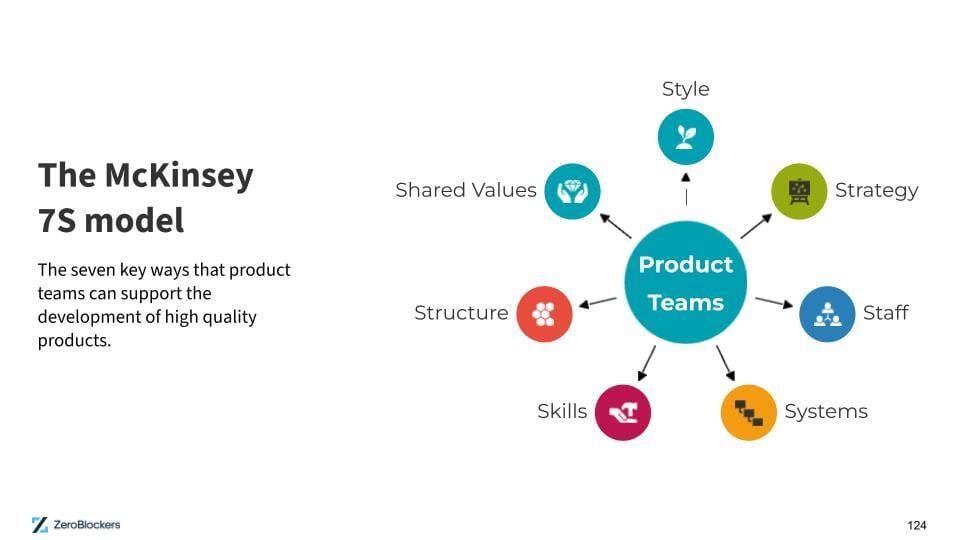
The Role of the Product Team in ZeroBlockers
Stream Teams – These are cross-functional teams of designers, developers, marketers, and researchers, each assigned to a specific value stream within the product. Their focus is on delivering features and improvements that enhance their part of the product.
Read edition ↗
The Product Model #258 - The Risks of Empowering Teams
"Empowerment sounds great on paper, but just telling teams 'you're empowered now, go build great things!' is a recipe for disaster" Ever heard this pushback before?
Read edition ↗
The Risks of Empowering Teams - and How to Mitigate Them
Empowering teams has evolved from a trendy management buzzword to a foundational principle in many agile, modern organisations. Done right, it allows quicker decisions, higher levels of engagement, and a more robust pipeline of innovative ideas. However, granting teams too much a
Read edition ↗The Product Model #257 - Why Products Fail
Centralised decision-making in product development may seem effective initially, just as the Soviet Union out-grew the US economy for almost two decades, but it ultimately stifles innovation and adaptability.
Read edition ↗
Why Products Fail
Building a successful product is notoriously difficult. But after having achieved the elusive Product-Market fit some products seem to still fail over time. While some failures are attributed to poor execution or bad timing, the deeper systemic reasons often lie in the structures
Read edition ↗The Product Model #256 - Finding the Balance Between Enablement and Control
Developer platforms are designed to accelerate software delivery by standardizing tools, workflows, and infrastructure, reducing cognitive load for teams. However, when platforms become overly prescriptive, they can stifle innovation and slow down progress.
Read edition ↗
Platforms: Finding the Balance Between Enablement and Control
Developer platforms emerge from a legitimate need: teams shouldn't waste time solving the same problems repeatedly. Authentication, logging, monitoring, deployment pipelines – these are all capabilities that benefit from centralisation and standardisation. However, the temptation
Read edition ↗The Product Model #255 - Design Systems Are Products
According to the 2021 Design Systems Survey, only 40% of the systems were successful. Design systems often fail despite their potential to drive consistency and efficiency, not due to poor quality but due to low adoption.
Read edition ↗
Design Systems Are Products
Traditional approaches to design systems often focus on technical aspects: building component libraries, style guides, and documentation. They assume that adoption will follow naturally in a Field of Dreams style “build it and they will come”. Instead, they often face low usage,
Read edition ↗The Product Model #254 - Problems With The Center Of Excellence Model
I think this one might annoy some of the readers out there, but the Center of Excellence (CoE) model is an anti-pattern, particularly when related to a service that every product team needs like Research, Design or DevOps.
Read edition ↗
Problems with the Center of Excellence Model
The DevOps Research and Assessment (DORA) has conducted comprehensive multi-year studies on high-performing technology organisations. Their 2019 State of DevOps report highlights that companies using high demand Centers of Excellence (CoEs) significantly underperform compared to
Read edition ↗The Product Model #253 - Agile Was Supposed To Save Us
In 1996 the Standish Group released the Chaos Report which showed that 40% of IT projects failed and a further 33% were challenged (over-time and over-budget).
Read edition ↗
Agile Was Supposed To Save Us
Agile emerged during this time as an alternative way to build software. It was a radical departure from rigid, top-down project planning. Instead of lengthy specifications and fixed timelines, Agile emphasised adaptability, customer collaboration, and iterative development. The g
Read edition ↗