Repaying the Trust in Empowered Teams
With great power comes great responsibility!
When a Product Team empowers a Stream Team to decide what to build for their value stream, it requires significant trust. Stream Teams must actively maintain this trust through complete transparency in their work, research, and decision-making processes.
Stream Teams should embrace scrutiny as an opportunity to demonstrate their thoroughness, actively seek expertise when needed, and maintain strong accountability. When challenges arise, they must own the outcomes, identify root causes, and implement improvements. This balance of autonomy and accountability creates a partnership that drives product excellence through empowered execution.
Do you think your organisation would embrace real autonomy for teams to decide what to build? |
This Week’s Updates
Enabling the Team
Repaying the Trust in Empowered Teams by Rory Madden
Empowered teams are a cornerstone of modern product development, but empowerment is not an entitlement - it is a responsibility. Product Teams place immense trust in Stream Teams to work autonomously and drive meaningful impact.
Tender Leadership With A Bit Of Mischief by Urszula Kluz
Great leaders balance empathy with playfulness. Leading with care, curiosity, and a touch of mischief helps teams stay creative under pressure and fosters cultures where experimentation feels safe and encouraged.
Product Direction
From Products To Systems: The Agentic AI Shift by John Moriarty
Agentic AI turns fixed products into systems that generate tailored experiences on demand, shifting designers and PMs from shipping screens to architecting constraints, guardrails, and ecosystems for human agent collaboration.
Designing Loops, Not Paths by Matt Fick & Max Peterschmidt
Replacing rigid workflows with cybernetic feedback loops lets teams design AI agents around sensing, comparing, and acting with humans inside the system, so products adapt continuously instead of forcing users through fixed paths.
Continuous Research
AI-Augmented Workflows For UX Research: Making Insights Accessible And Actionable by Nathaniel Steinrueck
Turning scattered research assets into an AI-powered knowledge layer by tagging repositories, Slack bots, and custom copilots will help stakeholders query real evidence on demand and researchers amplify their impact instead of just shipping decks.
How UX Research Shapes AI Evals by Pooja Dhaka
UX research turns abstract AI quality metrics into evidence-based evals by defining what “good” looks like for users, translating that into clear scoring guidelines, and pairing LLM judges with human feedback so AI performance reflects real trust and usefulness.
Continuous Design
Taste VS. Empathy by Filip Mishevsk
Designers often mistake personal taste for empathy. True user-centred design means separating aesthetic preference from user needs and balancing intuition with evidence to create work that resonates beyond one’s own perspective.
How To Build A Resilient Design Team by Jonas Downey
Seven habits for design leaders to keep teams steady in volatile conditions: prioritising psychological safety, clear expectations, sustainable pace, and honest communication so designers can take creative risks without burning out.
Continuous Development
Vibe Engineering by Simon Willison
Vibe engineering treats AI coding agents as accelerators for disciplined engineers, leaning on tests, planning, docs, and code review so parallel agents boost delivery while humans stay fully accountable for production quality.
Why Your Boss Isn't Worried About AI by Boyd Kane
Most leaders still treat AI like regular software with fixable bugs, missing that failures come from opaque training data and emergent behaviour. Bridging that gap in mental models is key if experts want execs to take AI risk and governance seriously.
Seen an interesting article online? Share it with us, and we might feature it in our next issue!
Click here to share an article

Make Your 2025 Budget Work Harder For 2026
3 Things People Are Doing To Not Lose Budget
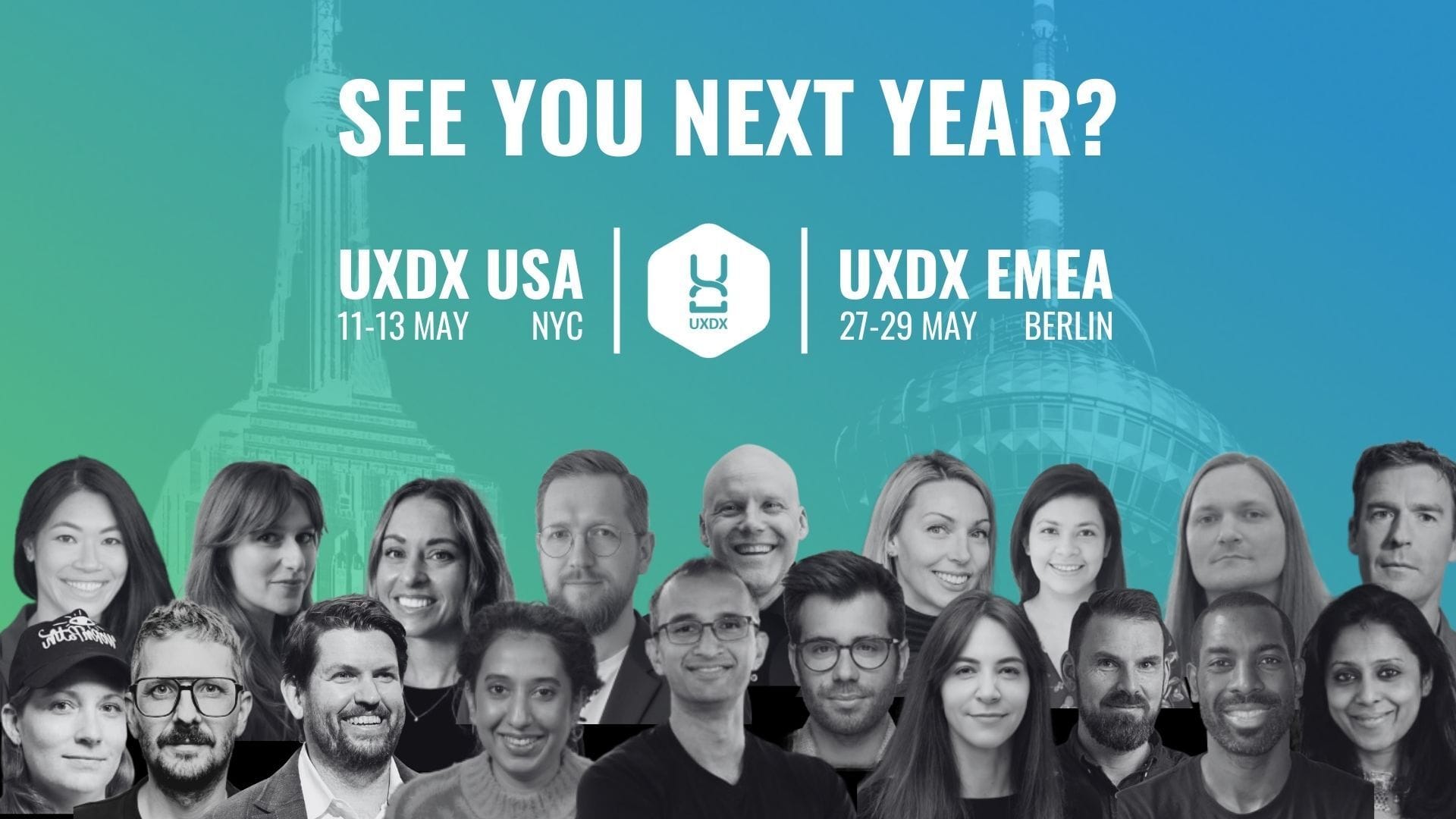
As 2025 draws to a close, many teams are looking at what remains of their learning and development budgets and deciding whether to invest wisely or let it quietly disappear. If you want to start 2026 with momentum, this is the ideal moment to secure access to UXDX EMEA in Berlin or UXDX USA in New York.
Teams are already using leftover budget to lock in individual tickets for a dedicated reset, buy team tickets with different departments so cross-functional groups can learn together, or get a low price ticket now and upgrade next year to workshops that turn the event into actionable working time.
Whether you need clarity for product strategy, deeper alignment across UX, design and engineering, or a shared understanding of what “AI-ready teams” actually look like, planning now means starting the year ahead rather than catching up. Explore the ticket options for both editions and make the most of the budget you still have available:
UXDX USA 10% Discount: 10NEWSLETTERUSA26 | UXDX EMEA 10% Discount: 10NEWSLETTEREMEA26 |

FREE COMMUNITY EVENTS
IN-PERSON 13 Dec: Washington, DC 22 Jan: Dublin 28 Jan: Boise 🔔 Want a UXDX Community event in your city? or, alternatively, if your company wants to host an in-person event, please reply and let us know. | ONLINE |
Video Of The Week
Designing for Business Impact:
A Transformation Journey At Uber
What happens when a global design team moves from craft to true strategic influence? Joann Wu, Vice President and Global Head of Design at Uber, shares the inside story of a three-year transformation that reshaped how millions of people move, shop and earn.
In this UXDX USA 2025 talk, Joann walks through how her team rebuilt trust, integrated deeply with product and engineering, defined a shared language of quality, and used brave collaboration to drive real business impact. It’s a rare look at design leadership operating at a massive scale.
From redesigning Uber Ride and Eats to shaping company strategy through insights, field research and vision work, Joann shows how design can become a catalyst for organisational change rather than a service function. Watch the full talk now:
The Results of Last Week’s Poll
The question: What percentage of your week is spent in cross-team communication?
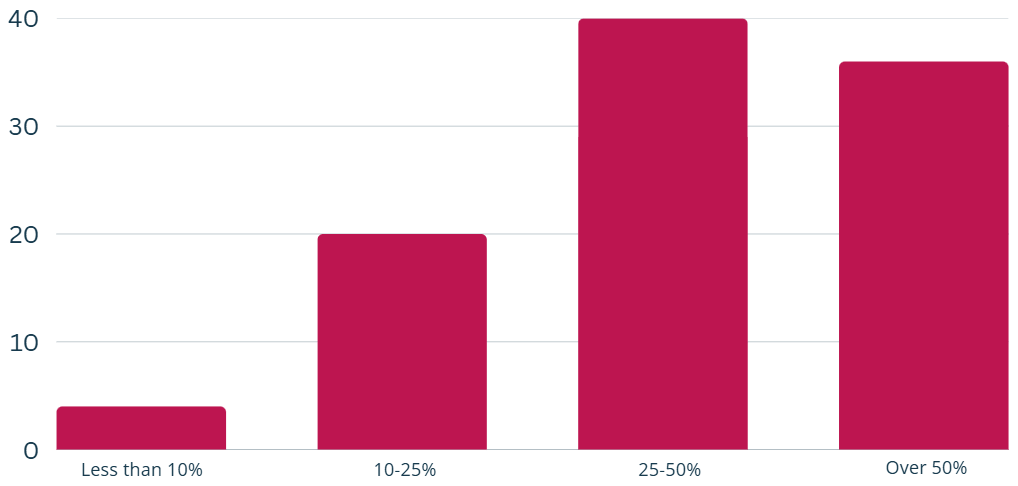
Last week’s poll asked what percentage of the week people spend in cross-team communication, and the answers underline just how collaborative modern product work has become. Only 4% of respondents spend less than 10% of their time talking across teams. The largest group, 40%, sits in the 25–50% range, with another 36% spending over half their week in cross-team conversations. Even the “light” bracket is now 10–25% for one in five people. For most, working with other teams is not an occasional activity; it is the job.
The challenge is that this level of interaction can either be a strategic advantage or a silent tax on focus. When cross-team communication is structured around clear goals, shared language, and real decision-making, it speeds up alignment and turns complexity into coordinated action. When it is fragmented across ad hoc pings, unprioritised meetings, and unclear ownership, it eats into deep work and leaves people feeling busy but not effective. The signal from this poll is not that teams need less communication, but that they need more intentional communication, so the time already invested actually moves the work forward.