
Common Objections To Empowering Teams (And How To Rebut Them)
I know first-hand the pushback that you get when you suggest making changes to how teams work. Empowering teams is difficult because it changes the process of how teams work, how people are upskilled, how you avoid duplicating work, how you can be confident that teams are working efficiently and effectively and more.
In this week’s article, I go into the most common objections and how you can alleviate people's concerns.
Just in time for New Year's resolutions as well.
Do you personally think that empowered teams are a better way of organising product delivery? |
This Week’s Updates
Enabling the Team
Common Objections To Empowering Teams (And How To Rebut Them) by Rory Madden
Empowered cross-functional teams challenge traditional ways of working, but they ultimately lead to higher efficiency, better quality, and faster decision-making.
How Vague UX Communication Breeds Misalignment by Anamol Rajbhandari, Gaayathri Sankar, Huda Najm Alabbas
Soft, fuzzy UX phrases hide real disagreements until late in delivery. Turning them into shared definitions and concrete outcomes keeps teams aligned and reduces rework.
Product Direction
The Total Impact Matrix - Beyond Blind Bets by Itamar Gilad
The Total Impact Matrix helps leaders see how much development time is spent on low or negative impact ideas, turning vague bets into a portfolio view that pushes teams toward bolder, better evidenced, higher impact bets.
4 Steps To Building A Product Strategy by Ant Murphy
Treat product strategy as a repeatable craft through four steps: from inputs to choices, using narratives and leverage points to turn scattered data into a clear, communicable set of bets.
Continuous Research
How to accelerate 0→1 research with AI by Mike Brzozowski
Using AI as a research partner, not a shortcut, lets UXRs ramp up in new domains, mine thick interview data and structure JTBD faster while still relying on human judgment for insight.
The Psychology Of Trust In AI: Why “Relying On AI” Matters More Than “Trusting It” by Verena Seibert-Giller
Reframes trust in AI as reliance, arguing that users do not need AI to feel human; they need systems that are predictable, transparent, and controllable so they can safely lean on them in real decisions.
Continuous Design
Embracing Design Dialects: Enhancing User Experience by Michel Ferreira
Treating design systems as living languages instead of rigid rulebooks lets teams create intentional “dialects” for different contexts, so products stay coherent while still flexing to real user needs and constraints.
The Missing Bar, Why We Need X-Shaped People In A Digital World by Tash Willcocks
X-shaped people add a grounding bar of self-awareness and human skills to classic T-shaped craft and breadth, using empathy, curiosity, and emotional intelligence to hold volatile, cross-disciplinary digital teams together.
Continuous Development
Beyond Vibe Coding: How AI Can Transform Pull Requests by Zichuan Xiong
Consolidating fragmented tooling into PinConsole, a Backstage-based internal developer platform, cuts cognitive load and speeds shipping by giving engineers a single, service-centric place to deploy, debug, and manage production safely.
Reimagining Software Engineering: LLMs, MCP, And The Dawn Of A New Programming Paradigm by Rafael Torres
Combining LLMs with the Model Context Protocol turns chatbots into operational agents that can read, change and orchestrate real systems, shifting engineering from writing every line of code to supervising intent-driven agents while investing heavily in security, governance, and verification.
Seen an interesting article online? Share it with us, and we might feature it in our next issue!
Click here to share an article

Thank You For An Amazing 2025
We Can’t Wait For 2026!
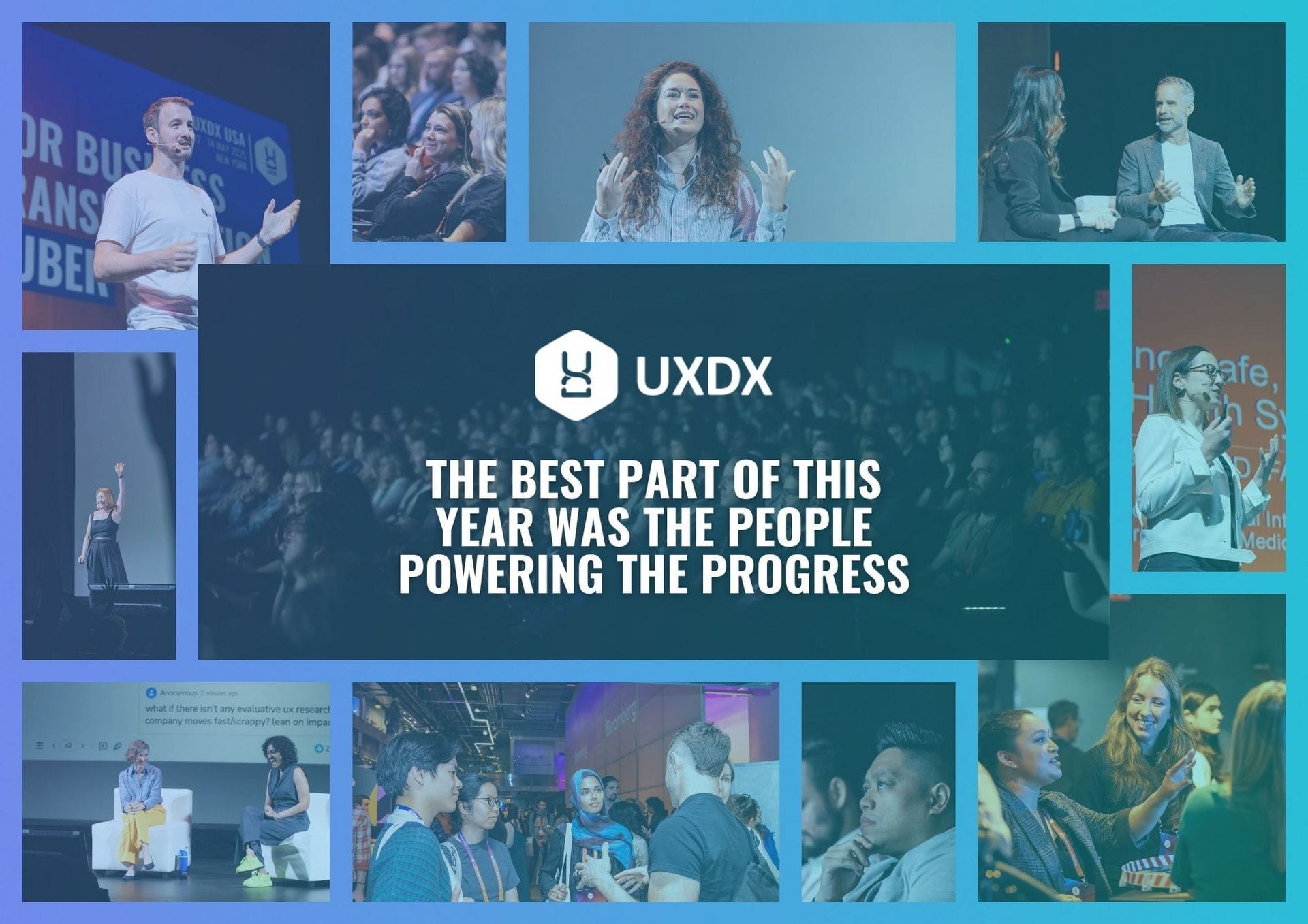
As 2025 comes to a close, we wanted to take a moment to look back on an incredible year for UXDX. Thank you to everyone who made it happen: our speakers for sharing their work so openly, our attendees for bringing the energy and curiosity, our partners and sponsors for backing the experience, and our ambassadors for welcoming new people into the community. From the sessions on stage to the conversations in between, this community showed up with generosity and a real willingness to learn from each other.
Looking ahead, 2026 is already taking shape. Around 80% of the agenda is live on the site now, so you can start planning early, pick the sessions that matter most to your team, and use the ticket links and discount codes below while they’re available:
UXDX USA 10% Discount: 10NEWSLETTERUSA26 | UXDX EMEA 10% Discount: 10NEWSLETTEREMEA26 |

FREE COMMUNITY EVENTS
IN-PERSON 10 Jan: Istanbul 21 Jan: Copenhagen 22 Jan: Dublin 22 Jan: Los Angeles 28 Jan: Boise 13 Feb: Oslo 🔔 Want a UXDX Community event in your city? or, alternatively, if your company wants to host an in-person event, please reply and let us know. | ONLINE 27 Jan: AI Speed, Real World Design |
Video Of The Week
Human-Centred AI Across Standard Chartered
What does it take for a 172-year-old bank to build AI responsibly without losing empathy, trust, or human identity? At UXDX EMEA 2025, Emily Yang (Head of Human-Centred AI and Innovation – Strategy and Talent, Standard Chartered) shared how her team is redefining what innovation means in the age of AI. Emily’s journey from biochemistry to human-centred AI has shaped a philosophy that technology is only 30% of the solution; the other 70% is people. She breaks down the ten human factors shaping AI adoption across Standard Chartered, from fairness, transparency, and accountability to culture, education, and sustainability.
See how her team built an AI literacy hub for global employees, rolled out award-winning people-first AI projects, and turned UX research into real organisational change. Emily challenges leaders to think beyond automation and to design systems that let humans flourish in an AI-driven world. Watch now to learn why the future of AI depends on keeping humans in the group and machines in the loop:
The Results of Last Week’s Poll
The question: Do you set outcome targets or output targets in your quarterly planning?
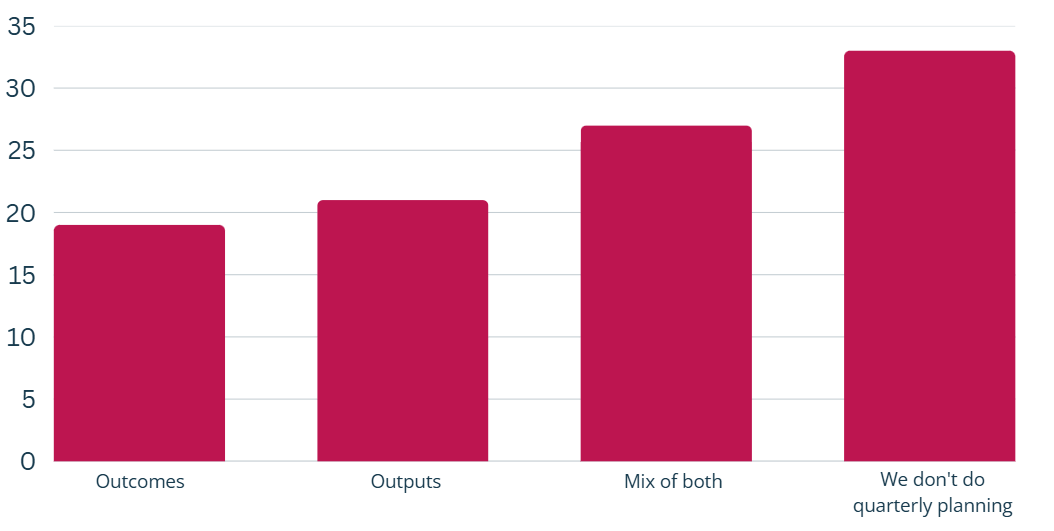
This week’s poll asked whether teams set outcome targets or output targets in quarterly planning, and the most interesting result is that the biggest group (33%) doesn’t do quarterly planning at all. That usually means one of two things: either planning happens on a different cadence, or teams are operating without a consistent strategic rhythm, which makes alignment harder and trade-offs noisier.
Among teams that do plan quarterly, the split is close: 21% focus on outputs, 19% focus on outcomes, and 27% use a mix. That “mix” is often where the best planning lives, as long as it’s done deliberately. Outputs are useful when they’re treated as bets in service of an outcome, not as the outcome itself. The teams that struggle are the ones measuring delivery and calling it impact.