Why We Need A Brooks' Law For Teams
Brooks' Law showed us that adding people to a late project makes it later due to the exponential increase in communication overhead. But modern organizations face a more complex challenge: managing portfolios of interconnected products with dozens of teams sharing resources, infrastructure, and dependencies. And these dependencies also grow exponentially.
Because everything is interconnected, when one project slips, companies spend a huge amount of time and money replanning all of the different interlinking dependencies to get the plan back in order. Usually just in time for another project to slip.
The solution isn't to manage dependencies with more project managers and scrum masters - you can't manage your way out of exponential growth. Instead, we need to remove them.
Like Toyota's "One Piece Flow" philosophy that eliminated manufacturing backlogs, we must systematically chip away at dependencies until we have "zero blocking dependencies from idea to satisfied customers".
How does your organization currently handle team dependencies? |
This Week’s Updates
Enabling the Team
Why We Need A Brooks' Law For Teams by Rory Madden
Brook's Law states that "Adding manpower to a late software project makes it later". We have the same issue with the number of teams working in parallel.
Management Values I Didn’t Expect To Learn by Ted Goas
Moving into design management got Ted focusing on team health, player-coach leadership, sliding scale delegation, and avoiding bottlenecks so managers become bridges between ICs and executives instead of blockers.
Product Direction
Maximizers VS. Focusers by John Cutler
Maximizers push for more bets, more scope and faster change, while focusers fight for fewer, deeper, better bets. Naming these forces and pairing them intentionally helps leaders balance ambition with focus instead of swinging between chaos and stalled caution.
Give Your Metrics An Expiry Date by Adrian Howard
Giving metrics expiry dates nudges teams to retire dashboards that no longer inform decisions, so attention stays on signals that are visible, actionable and actually used.
Continuous Research
Can AI Understand Feelings? by Suresh John Senegarapu
AI accelerates UX research by automating synthesis, prediction and sentiment at scale, but empathy stays the compass, with humans interpreting patterns, validating them with real people and handling ethics so insights remain meaningful rather than purely mechanical.
Standardizing AI Usage In UX Research by Ki Aguero
Standardizing AI in UX research means mapping workflows, auditing subtasks and risks, then putting AI “on rails” for intake, planning, and light synthesis so experiments stop living in silos and humans stay in charge of judgment and ethics.
Continuous Design
The UX Butterfly Effect by Martin Tomitsch & Steve Baty
Treating products as systems, not screens, means mapping feedback loops and impact ripples so teams can spot second-order harms early, and design guardrails before small UX choices snowball into large social or environmental consequences.
The Worst Designer I've Ever Worked With Was Also The Most Productive by B. Prendergast
Rewarding designers for speed and screen count floods backlogs with unchecked work. Incentives should be shifting toward discernment, alignment and measurable outcomes instead of sheer output.
Continuous Development
Spinning Plates by Dylan Martin
LLMs make it easy to spin more plates and ship more code while quietly weakening deep focus, so Martin suggests treating them as power tools, protecting no-LLM deep work and being deliberate about which tasks to hand over.
Your Data Model Is Your Destiny by Matt Brown
Your product's core abstractions determine whether new features compound into a moat or just add to a feature list.
Seen an interesting article online? Share it with us, and we might feature it in our next issue!
Click here to share an article

Plan Ahead, Check Out The 2026 Agenda!
Move Your AI Work From Experiments To Reliable Value
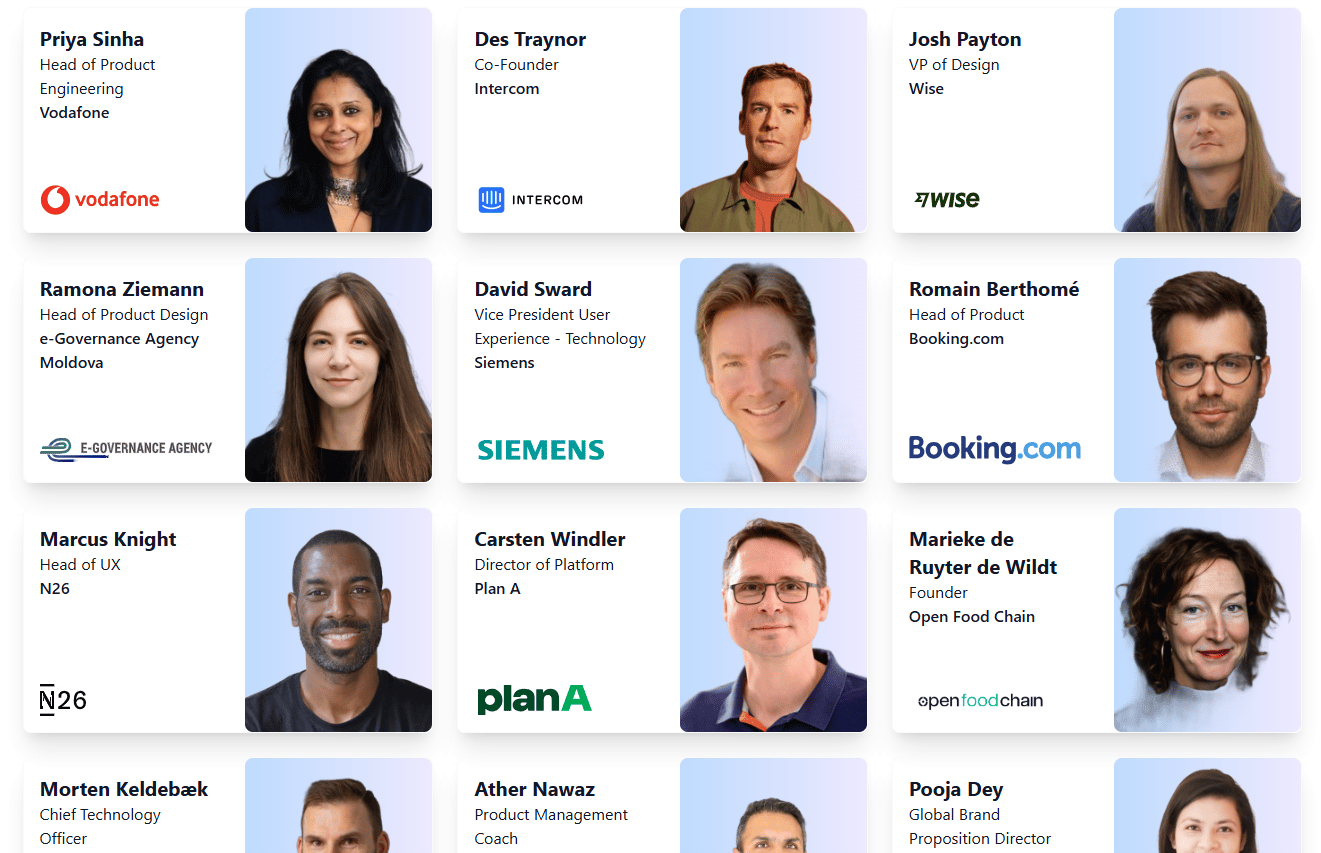
With most of the 2026 agenda now live, this is a good moment to look ahead and be intentional about what you want to get out of this year. Across both UXDX EMEA and UXDX USA, the focus is clear: moving AI work beyond pilots and hype, and into reliable, repeatable value for real teams and real products. The agenda brings together product, UX, design, and engineering leadership perspectives on how to build systems, teams, and ways of working that actually hold up at scale.
If UXDX is on your radar, it’s also worth noting that prices increase on 18 January 2026 for both events. Planning early gives you the best choice of tickets, workshops, and team options, while locking in the lowest available price. Take a look at the USA agenda and/or EMEA agenda here to see how it fits your priorities, and make the decision while it’s still easy to justify.
UXDX USA 10% Discount: 10NEWSLETTERUSA26 | UXDX EMEA 10% Discount: 10NEWSLETTEREMEA26 |


FREE COMMUNITY EVENTS
IN-PERSON 10 Jan: Istanbul 15 Jan: Berlin 21 Jan: Copenhagen 22 Jan: Dublin 22 Jan: Los Angeles 28 Jan: Boise 13 Feb: Oslo 🔔 Want a UXDX Community event in your city? or, alternatively, if your company wants to host an in-person event, please reply and let us know. | ONLINE 27 Jan: AI Speed, Real World Design |
Video Of The Week
From Design Systems To Interaction Systems:
Creating Coherent AI Experiences
What happens when every team is racing to build AI features, but no one is thinking about how those features fit together? At UXDX EMEA 2025, Connor Joyce (Senior User Researcher, Microsoft) delivered one of the most important talks of the conference by reframing the role of design systems in the age of AI. Connor shows why traditional component libraries are no longer enough. As organisations ship AI at scale, the real challenge isn’t visual consistency, it’s behavioural coherence. He takes you inside Microsoft’s journey with Copilot, revealing why design systems must evolve into interaction systems that guide conversations, handoffs, latency, confirmations, and the many subtle behaviours that shape trust in AI.
From his Kathmandu traffic analogy to a meeting where multiple teams unknowingly designed conflicting handoff patterns, Connor illustrates how quickly AI introduces fragmentation, and how systems teams can become strategic leaders rather than retroactive fixers. If you want a clear, practical way to rethink the foundations of AI product design, check out this video:
The Results of Last Week’s Poll
The question: Do you personally think that empowered teams are a better way of organising product delivery?
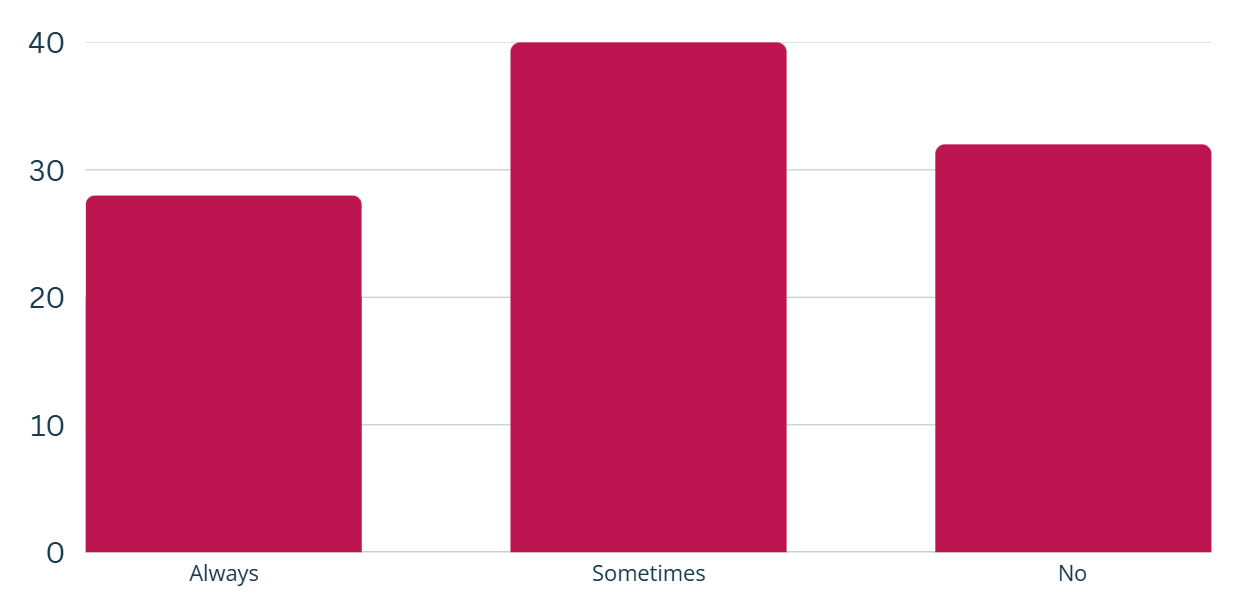
Last edition’s newsletter poll asked whether empowered teams are a better way of organising product delivery, and the answers show a healthy amount of nuance. While 28% believe empowered teams are always the better approach, the largest group (40%) says it depends, and 32% don’t believe empowered teams are the right model at all.
That “sometimes” is doing a lot of work here. Empowered teams aren’t a silver bullet. They work best when there’s a clear strategy, meaningful constraints, and real trust from leadership. Without those, empowerment can quickly turn into confusion, duplicated effort, or stalled decision-making. In those environments, teams often end up wishing for more direction, not less.
The takeaway isn’t that empowerment is good or bad, but that it has prerequisites. Empowered teams need clear outcomes, well-defined boundaries, and fast feedback loops. When those are missing, autonomy feels risky. When they’re in place, empowerment becomes one of the most effective ways to scale product delivery without slowing everything down.