The 4 Risks of Empowering Teams
The Product Operating Model, which empowers teams to build solutions based on direct customer conversations, should improve product outcomes, but some key risks can derail your efforts.
The Process Risk: Do your people have the skills to work autonomously? Can they identify problems and prioritise solutions?
The Alignment Risk: How do you ensure that teams will work on the highest priority areas and not just the latest buzzword?
The Governance Risk: How do you ensure teams are working efficiently and not getting stuck in analysis paralysis or over-engineering?
The Structure Risk: How do you ensure multiple different teams aren't working on the same problem?
In this week’s article, we go into more detail on the risks and the solutions.
What's your biggest fear about empowering teams in your organization? |
This Week’s Updates
Enabling the Team
The 4 Risks of Empowering Teams by Rory Madden
Dive into the four key challenges that you need to be aware of and work around to effectively manage the transition to autonomous product development.
Fast Is A Moat by Hardik Pandya
Treating speed as a moat means turning ideas into concrete prototypes quickly so you set the pace, force alignment, and stay ahead of shifting problems, with quality as the baseline and fast execution as the differentiator.
Product Direction
Prioritization Starts With Strategic Prioritization by John Cutler
Treating prioritisation as a strategy means starting from four business benefit types, downward pressure, and durable powers, then choosing a portfolio of bets where you build real leverage over time, rather than juggling random “high value” requests.
Chatgpt's Atlas: The Browser That's Anti-web by Anil Dash
Atlas poses as a browser while replacing links with AI-generated answers, forcing command-style prompts and turning users into data harvesting agents for OpenAI, raising serious questions about consent, privacy, and the long-term health of the open web.
Continuous Research
Are We Forgetting Humans When We Design AI Products? by Ebrar Kaynar
LLMs do not replace UX research; they expand it. Defining quality rubrics, prompt instructions, and eval signals from real user needs lets researchers shape how AI features behave, not just how they look in the interface.
Workshopping UX Research With Stakeholders by Kate Kaplan
Turning research findings into alignment, empathy, and application workshops helps stakeholders experience the research for themselves, so insights actually shape decisions instead of sitting in decks.
Continuous Design
Good From Afar, But Far From Good: AI Prototyping In Real Design Contexts by Huei-Hsin Wang and Megan Brown
AI prototyping tools follow general directions but lack the judgment and nuance of an experienced designer.
Making Medical Appointments This Month Made Me Miss Phone Trees by Chris Raymond
Replacing humans with AI receptionists in healthcare exposes how brittle, jargon-filled flows ignore real patient needs, so designing for clarity, empathy, and real-world edge cases matters more than chasing call centre cost savings.
Continuous Development
Racing Towards Bethlehem by Dylan Martin
LLM tools do not remove bottlenecks like review and shared understanding; they act as connective tissue that shrinks the search space and speeds context gathering, so engineers can reach the hard judgment work faster without outsourcing the parts that actually build skill.
Useful Engineering Management Artifacts by Bjorn Roche
When managing a growing organization, it is useful to have document templates on hand. Here are templates for core engineering management artifacts.
Seen an interesting article online? Share it with us, and we might feature it in our next issue!
Click here to share an article

Download Our Newly Released eBook Now
Managing Your Career In The Age Of AI
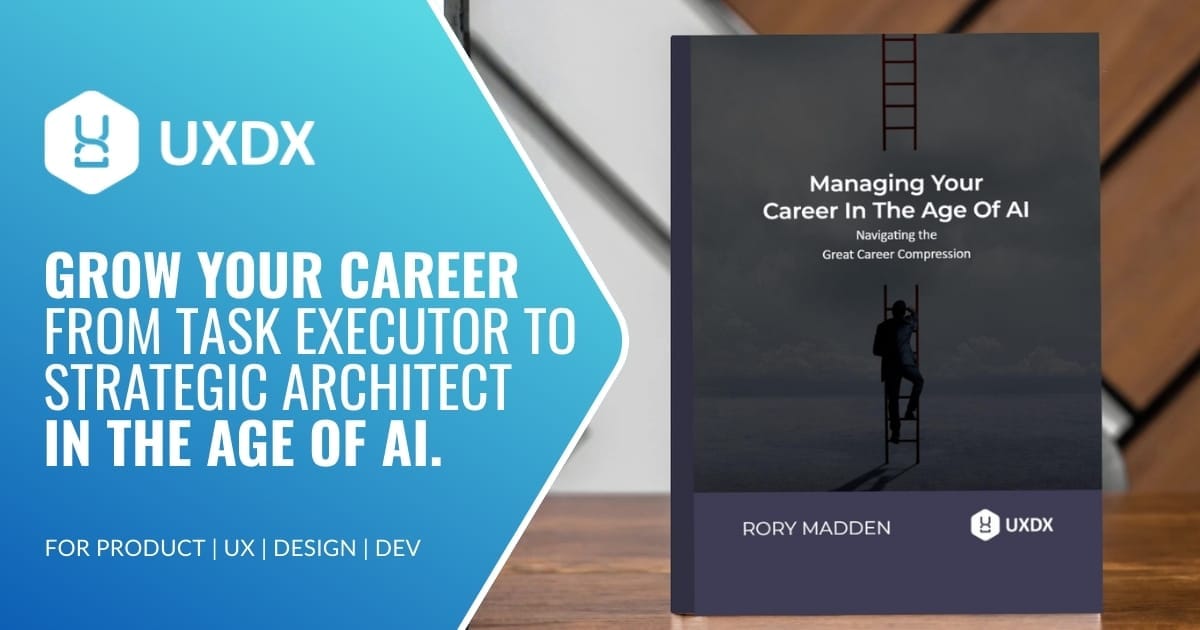
If you have felt the career ladder shrinking, you are not imagining it. Entry-level work is getting automated, expectations are rising, and the people who progress fastest are the ones building judgment and cross-functional fluency, not just shipping more output. I wrote an ebook to make sense of that shift and give you a practical path through it.
It’s called Managing Your Career In The Age Of AI: Navigating the Great Career Compression, and it breaks the ladder into four levels of thinking, plus what to do when the old runway disappears. You can download it here for free: https://uxdx.com/ebook/career-compression/
UXDX USA 10% Discount: 10NEWSLETTERUSA26 | UXDX EMEA 10% Discount: 10NEWSLETTEREMEA26 |


FREE COMMUNITY EVENTS
IN-PERSON 21 Jan: Copenhagen (SOLD OUT) 22 Jan: Dublin (SOLD OUT) 22 Jan: Los Angeles 28 Jan: Boise 10 Feb: Berlin 13 Feb: Oslo 🔔 Want a UXDX Community event in your city? or, alternatively, if your company wants to host an in-person event, please reply and let us know. | ONLINE 27 Jan: AI Speed, Real World Design |
Video Of The Week
Leveraging AI for Safer and More Efficient Healthcare Delivery
What does it really take to move AI from research paper to bedside care when lives are on the line? Ashley Beecy, MD, FACC, and Medical Director of AI Operations at New York Presbyterian Hospital, shares how her teams are using AI to detect heart disease earlier, reduce clinician burnout, and improve equity in access to advanced care, all while staying inside the realities of clinical workflows.
In this talk, Ashley lifts the curtain on the unglamorous but critical work behind successful AI products in healthcare. From turning messy EHR data into AI-ready infrastructure, to embedding predictions directly into Epic, to building AI governance that clinicians actually trust, she shows how to close the gap between forty thousand machine learning papers and a thousand FDA-approved models. If you are working on AI in any regulated industry or trying to design for high-stakes environments, make sure to watch this one:
The Results of Last Week’s Poll
The question: Which type of team dependency blocks your team most often?
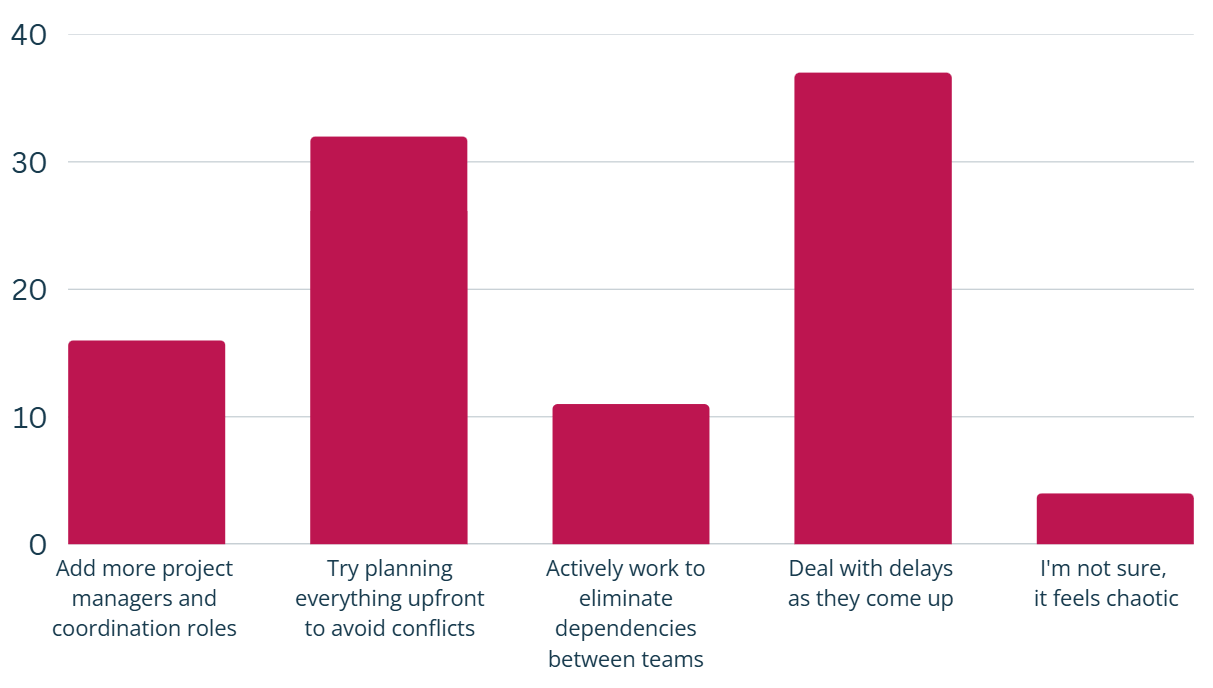
Last week’s poll asked which type of dependency blocks teams most often, and the result is blunt: structural waiting dominates. Half of respondents say they’re most often stuck waiting for another team’s work, which is the classic symptom of unclear ownership, shared backlogs, and “we’ll get to it next sprint” handoffs. Governance friction comes next (29%), showing how approvals and review gates can quietly turn into the slowest dependency of all.
Technical dependencies (14%) and knowledge gaps (7%) show up too, but they’re not the main bottleneck for most teams. That’s interesting, because we often blame architecture or tooling when the real drag is organisational design. One comment nailed the day-to-day reality: “When requirements are not there, when no user story is written... it's very hard to start designing anything.” That’s not a technical dependency, it’s a clarity dependency. No shared definition of ready means work can’t flow, so people wait.
The takeaway is that dependency reduction is rarely solved by “better coordination.” It’s solved by designing for flow: tighter team boundaries, clearer interfaces between teams, fewer approval gates, and a stronger discovery and planning rhythm so teams can start with confidence instead of ambiguity.