This Week's Updates: Leading AI-enabled teams, product decisions, research enablement, agentic interfaces and taking ownership in development.
Disrupt Yourself Before Someone Else Does
Google's latest earnings revealed an interesting problem. Its AI-powered search is growing, but it's making less money per search because people are getting their answers straight away and not clicking on ads.
I thought that internally Google might start pressuring their search team, but Rhi Bell, VP of UX for Search at Google, shared on stage at UXDX San Francisco last week, that the Search team is completely independent. They are focused on making search the best for customers because that is how Google won the search wars in the first place.
The truth is that you do sometimes have to put your existing business at risk to build what comes next, or end up being replaced (hello Kodak).
Intercom and Netflix are other great examples where they had to cannibalise their core products while they built a new product to replace it.
What does this mean for product teams?
AI has changed the rules, and it is changing them fast. There are a lot of business models that will get disrupted in the next decade. If you are not looking now at how to shift already, you might find it is too late. That won't make the difficult conversations easier to have, though, so good luck.
This Week's Updates
Enabling the Team
Team Dynamics Weaken When Employees Turn to AI Instead of Colleagues by Kate Niederhoffer, Kristina Rapuano, Alex Liebscher, Alexi Robichaux and Jeffrey T. Hancock
When employees turn to AI instead of colleagues for knowledge and problem-solving, teams can lose the shared understanding of who knows what that makes collaboration efficient. Leaders therefore need to think beyond individual productivity.
Why We Sabotage Our Careers by John Cutler
What looks like self-sabotage at work can actually be a protective response to toxic dynamics, threatened values or identity, so growth often comes less from trying to “fix” yourself and more from understanding.
Product Direction
AI Hypervigilance Is Now an Omnipresent Cognitive Load for Your Users by Pavel Samsonov
AI can save product teams time while making customers inspect more generated output. Pavel argues that the verification burden is becoming a UX problem.
How to Find Leading Indicators: Journey Mapping and Driver Trees by Büşra Coşkuner
Leading indicators help teams act before outcomes are locked in, but they only become useful when tied to the user behaviours that actually drive results. Mapping journeys and driver trees helps teams identify the few upstream signals that matter instead of treating every actionable metric as predictive.
Continuous Research
What Our AI Interviewer Taught Us About Conversational AI [Sponsored Content] by Optimal
AI-moderated interviews work best when the experience feels responsive, low-pressure and easy to control. Reflecting users’ own words, avoiding repetitive questions, offering multiple interaction modes and being clear about limits can make conversational AI feel more natural and trustworthy.
The Six Gifts of ResearchOps: Scaling Research Learning Through Structured Play by Jared Forney
Research democratization works best when people build skills gradually. Teaching one practice at a time helps partners develop better judgment and rely less on ResearchOps.
Continuous Design
The Day the Interface Stopped Waiting by Tushar Deshmukh
When AI agents act before people click, design must make intervention, limits and recovery visible, not only optimise the happy path.
Beyond Productivity: Designing Space for Creativity by Adobe Design
Creative quality needs room for exploration, play and attention. The article questions whether constant output pressure leaves designers enough space to think.
Continuous Development
Taking Ownership at Work Means Doing the Thinking by Fran Soto
Ownership means moving problems forward instead of passing them to colleagues or AI. Clear context, informed proposals and personal judgment reduce coordination drag and keep responsibility with the person closest to the work.
An Accidental Blackboard by Giles Edwards-Alexander
In an experiment with ten engineers, coding agents began coordinating through shared repository context, revealing new challenges in organising autonomous software work.
Seen an interesting article? Share it with UXDX.
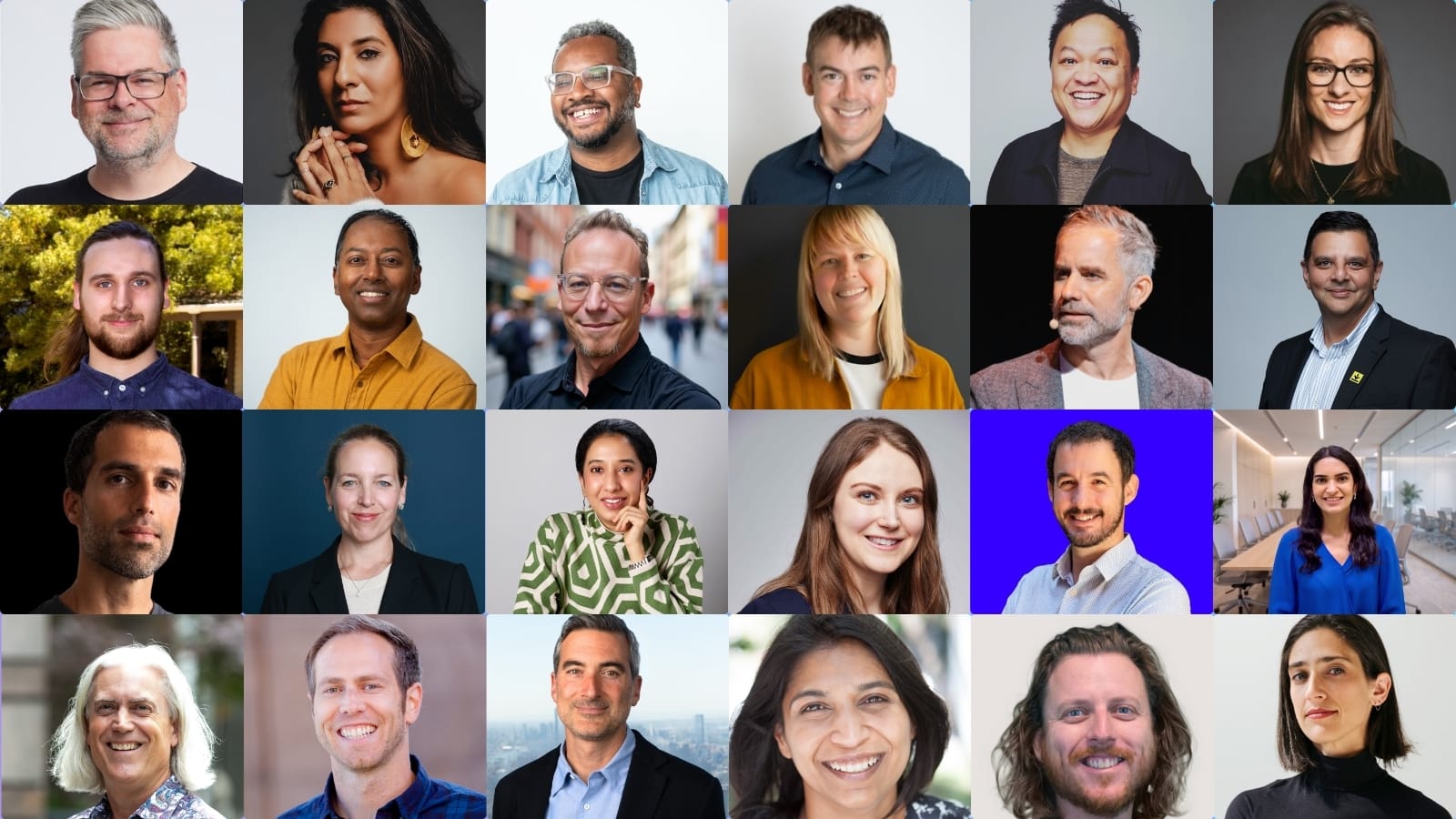
Thank You, San Francisco. Next Stop: New York!
What an incredible two days at UXDX San Francisco! From rethinking product roles and scaling AI beyond pilots to building products customers can trust, our speakers shared real experiences, challenges and lessons from inside their organisations. A huge thank you to everyone who joined us, shared their perspectives and made the conversations so valuable, both on and off the stage.
We're already looking forward to bringing the community together again at UXDX New York, 10–12 May 2027. Expect a bigger event with more practical case studies, honest conversations and opportunities to connect with the people changing how products are built. We can't wait to see you there!
Community Events
Upcoming online event
Tomorrow: Agenda Setting in Enterprise UX, free online workshop.
Upcoming in-person event
17 November: Chicago
Want a UXDX Community event in your city? Apply to become an ambassador.
Video of the Week
The Product Trust Gap
A successful A/B test doesn't always mean a better customer experience. In this UXDX EMEA talk, Sam Bradley from PayPal shares lessons from Expedia, Stitch Fix and PayPal on how product decisions can boost short-term metrics while unintentionally damaging customer trust.
From misleading checkout timers to AI-driven recommendations, Sam explores why conversion alone tells an incomplete story, how teams can measure trust more effectively, and why transparency and customer control matter as products become increasingly automated.
Watch the full session to learn how product teams can balance business performance with long-term customer trust.
Want to explore how careers and leadership are shifting as AI changes product work? Read Managing Your Career in the Age of AI.