UXDX Blog
The UXDX Blog has its own subscriptions, separate from our newsletters.
The Product Model #239: When Do You Know You've Tested Enough?
The biggest risk in product development is building products that customers don't want. But the next biggest risk is analysis paralysis, where teams spend all their time and budget trying to evaluate whether they're building the right thing.
Read edition ↗
When is Enough, Enough? Or When Do You Stop Testing and Start Building?
One of the most challenging decisions teams face is determining when to transition from testing designs to actual development. In reality this decision is fairly straightforward. The problem is that our organisation structures and processes have made it complicated.
Read edition ↗The Product Model #238: Moderating A Usability Test
The presence of a moderator during a usability test influences the dynamic of a test. Nobody likes having someone look over their shoulder and judge them. This is why the moderator role is so crucial in ensuring that you get high-quality insights from your tests.
Read edition ↗
How to Moderate a Usability Test: A Comprehensive Guide
After defining assumptions, creating an experiment plan, and crafting usability test plans, it's time to run the sessions. This stage requires careful moderation to ensure the insights are unbiased, actionable, and valuable.
Read edition ↗The Product Model #237: Why We Need to Create Experiment Plans
It is far too easy to fall into the trap of believing that customers will love what we are building. That is why we go to the effort of breaking down our solutions, identifying assumptions, and then trying to evaluate them. But there is still one hurdle left to overcome - our bia
Read edition ↗
How to Create an Experiment Plan (And Why)
Creating meaningful experiments is harder than it seems. Have you ever gotten feedback, whether it is for a product or just in general, and then immediately gone on the defensive?
Read edition ↗The Product Model #236: Creating Task Plans for Usability Tests
Most advice around testing seems to focus on generative interviewing. This is critical to ensure that you build the right thing - but I believe there is a gap around advice on how to run high quality evaluative tests.
Read edition ↗
Creating an Effective Usability Test Task Plan
Once we have confirmed that customers actually want a solution to the problem that we are looking to solve, we need to make sure that they want OUR solution. This is where usability testing comes in.
Read edition ↗The Product Model #235: Testing Solution Desirability (aka Positioning)
You have a great idea, you just need to evaluate whether customers really want it. You want to create a landing page and some social media posts that highlight how great your new feature is. But how do you convey the value of your product quickly and accurately?
Read edition ↗
Testing Solution Desirability (aka Positioning)
Testing solution desirability isn't just about having a great product; it's about positioning it effectively in the market. I remember speaking with an engineer a few years back and he had a profound dislike for anything to do with marketing. He believed that a product should spe
Read edition ↗The Product Model #234: 3 Types of Design Experiment (and when to use them)
When identifying the assumptions behind our solutions, we categorised them under the four key product risks: desirability, usability, feasibility, and viability.
Read edition ↗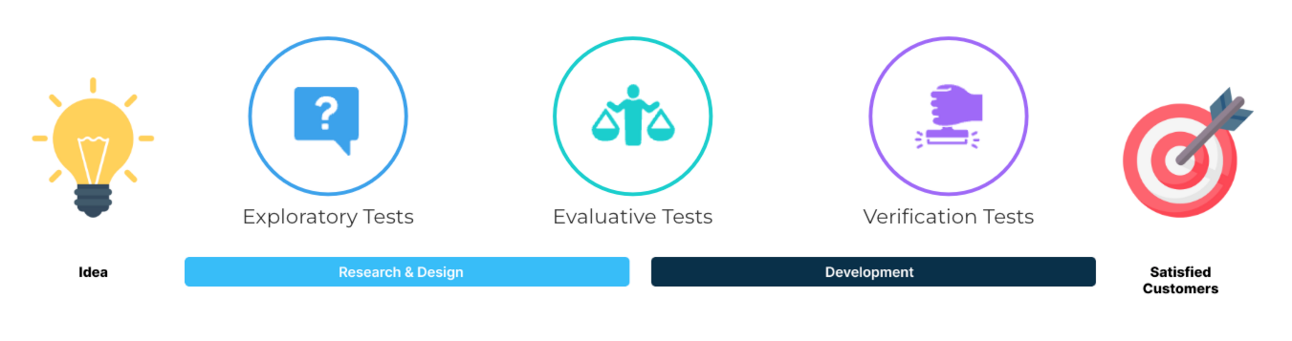
3 Types of Design Experiment (and when to use them)
You’ve done direct research with customers, you’ve extracted the insights, priortised a problem, ideated on solutions, identified the leap-of-faith assumptions and now you are ready to start testing them to reduce the risk in your solution. But where do you start?
Read edition ↗The Product Model #233: The Biggest Lie that Designers Believe about Software Development
Design is creative, it's messy, there are lot's of dead ends and backtracking as you iterate towards solutions that work. Development is a more logical, linear flow of turning the design into working software. It sounds great - but it's wrong.
Read edition ↗